Christian Fine Art Colleges
By clicking on the "Continue" and/or "Submit Request" button(s) on this form I am providing my electronic/ESIGN signature and agreement of expressed written consent to permit The Christian Connector, Inc. and the schools selected, and the parties calling/texting on behalf of the schools, to contact me at the phone number I provide for marketing purposes, including through the use of automated technology, SMS/MMS messages, and prerecorded/artificial/AI generated voice calls about education related opportunities. Message and data rates may apply. I understand that my consent is not required to obtain any goods or services from The Christian Connector or any of the colleges/universities. I acknowledge that I may select as many, or as few, schools as I wish to receive information from. I agree to the terms and privacy policy as well. I understand I can call 800-667-0600 to request information without providing any phone number.
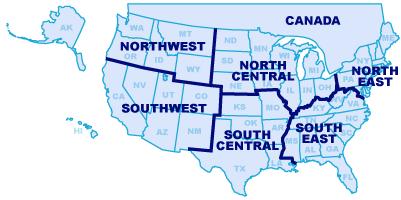
Click on the map below to bring schools in the selected region to the top of the list:







Articles on Fine Arts:
A Future with a Fine Arts Degree
By Calli Wolfenden, Staff Writer
Art reaches through every culture, every religion, and every person. We may not think that we are all artistic, but to some degree we each appreciate and connect with art. Whether it’s the actor on the screen going through something you can relate to, a painting that moves you with the strokes of its brush, or the lyrics and bass to the song that gets you through your day, art touches all of us. Art is about connection, relationship, and expression, and we all partake. That’s what makes up the foundation of a fine arts degree.
At a Christian college, you’ll learn the basics of the fine arts degree, while also being given in-depth preparation in the specific branch of fine arts you’re pursuing. You’ll be encouraged to hone your craft as you learn to reflect the Lord’s image in the creative ability He’s given you. As you grow both technically and spiritually, you’ll find that practicing your art can also be a form of worship and preparation for your future.
Examples careers for those who choose to major in Fine Arts:
- Fine Artist: A fine artist creates art for aesthetic or intellectual purposes, which may be displayed in galleries, museums, or public spaces. Their work could also be sold to collectors, institutions, clients, or the public. They work with various materials, through various styles, such as painting, drawing, sculpting, printmaking, and more. They often aim to convey emotions or ideas, or possibly challenge perceptions and provoke thoughts through their work.
- Animator: An animator is a professional artist who brings life and movement to 2D or 3D art, usually through the use of technology and software, in order to tell a story. The result is movies, cartoons, video games, anime, ect. Some of their main roles are storyboarding, creating backgrounds and characters, and drawing frame-by-frame to create movement.
- Art Director: An art director oversees the style and images in magazines, newspapers, movies, product packaging, and television production. They coordinate with designers, photographers, artists, and clients to make sure that the visual elements are cohesive and convey the desired message or tone. Art directors are vital in the design process, making decisions about overall designs, artwork, and layout.
- Actor: Actors bring characters in a story or script to life in performances, movies, and theater productions. They work with writers, directors, producers, and crew members of productions of any kind to engage and connect audiences with their stories through their character portrayals, voice performances, body language, and emotions.
- Museum Curator: Museum or gallery curators manage collections of artworks or historical artifacts, ensuring that they are properly acquired, cared for, preserved, and presented. They organize the exhibitions and present pieces to the public in an engaging and educational way, usually including written catalogs of the art as well. Curators work closely with artists, lenders, and other museums, making sure that the art is taken care of and properly preserved and displayed, based on the materials used.
- Illustrator: An illustrator is a professional artist who creates images or “illustrations” for books, magazines, text, advertisements, and digital media. They work to complement and bring to life ideas from clients or authors in their writing/content. They can be found in many industries, such as publishing, fashion, animation, and advertising. Illustrators are talented and practiced in using many mediums, like painting, sketching, and using digital tools.
- Art Educator: An art educator is a teacher whose area of focus is the Art. They can teach at any level, from elementary to higher education, at public and private schools, or in community settings. Art educators instill an appreciation for art and teach techniques, different ways to use materials, art history, and even art theory. They can be in many roles aside from teaching, branching to curriculum development, student assessments, and organizing exhibitions for student artwork.
- Art Therapist: Art therapists are licensed mental health professionals who help clients process emotional, mental, or behavioral illness, or other illnesses or trauma, through a combination of traditional psychotherapeutic practices and artistic/creative activities. Art therapy allows patients to express themselves, develop healthy coping mechanisms, improve self-esteem, and practice creativity. Art therapists can work in schools, rehabilitation centers, hospitals, or private practices.
Placement rates aren’t terribly optimistic for those who choose to major in fine arts. The fine arts degree has one of the highest unemployment/underemployment rates in the nation, which makes the career field highly competitive and difficult to break into. The median annual salary for those with a fine arts degree is about $50,000. However, with diverse career options, there is great variety in earning potential, with some careers earning over $80,000 annually. While success may be challenging to attain, it’s certainly not impossible. So, what are some things you can do to prepare?
Because of the intense competition within the creative industry, it won’t cut it to just be “good” at an artistic discipline; you need to be exceptional. That means practice, practice, practice. Put in the hours outside of the classroom and homework. Allow your creative impulses and ideas to flow beyond the structures given you in assignments. Create your own art to add to your portfolio and take every chance you have to be creative, whether that’s painting, acting, sculpting, sketching, or practicing graphic design. Whatever it is you’re going for, you’ll have to work at it extensively, hone your craft, and set yourself apart in skill and devotion to your art.
With practice comes your developing your portfolio. Depending on your chosen art form, these could be sculptures, photos, paintings, or videos of your roles/concerts. It should be a good mix of personal projects and class or professional work, with some variety to highlight diversity in your skillset. Your portfolio is key to displaying what you are capable of, your expertise, and what you have to offer to potential employers or clients in the future.
Networking and professional experience are also crucial to building credibility and landing future employment. Prioritize internships or professional projects that will give you real-world experience in the career field that you can use later on to speak to your qualifications. Invest in the connections that you make through these work experiences, as well as connections with your professors, classmates, and mentors. You never know when these connections may pay off in the future, getting you recommendations or potentially even jobs based primarily on their knowledge of you and your work. Never underestimate the power of knowing the right people.
Pursuing a career with a fine arts degree requires you to be resilient and self-motivated. You’ll need to be able to dedicate a lot of time to working on one project. Attention to detail and perseverance are also must-haves, as the smallest details are what make up great works of art. Criticism, both good and bad, will come with the territory, so you’ll need to learn not to take it personally, and turn it into something constructive to help you grow in your craft. Communication skills are also key, as you’ll often work with clients or on teams to complete projects. Being willing to try new things and tenacious enough to see them through is what will set you apart from the crowd. These characteristics will make any individual well suited to a career with a fine arts degree, in an entrepreneurial capacity, business role, or in ministry.
Work Cited:
- Bureau of Labor Statistics, U.S. Department of Labor, Occupational Outlook Handbook, Field of degree: Fine and performing arts, at https://www.bls.gov/ooh/field-of-degree/fine-arts/fine-arts-field-of-degree.htm (visited March 10, 2025).
- “Fine Artists, Including Painters, Sculptors, and Illustrators.” U.S. Bureau of Labor Statistics, U.S. Bureau of Labor Statistics, 3 Apr. 2024, www.bls.gov/oes/2023/may/oes271013.htm.
A Fine Arts Degree and Ministry
By Calli Wolfenden, Staff Writer
The fine arts are all about expression, engagement, and creation. Made in the image of the Lord, we are given the unique ability to be creative and use that creativity to glorify and worship him.
Exodus 35:35
“He has filled them with skill to do all kinds of work as engravers, designers, embroiders in blue, purple, and scarlet yarn and fine linen, and weavers—all of them skilled workers and designers.”
1 Chronicles 15:16
“David told the leaders of the Levites to appoint their fellow Levites as musicians to make a joyful sound with musical instruments: lyres, harps, and cymbals.”
Fine arts make up several major categories of worship, such as worship music and artistic expression. A painting of Biblical scenes or one that speaks to the testimony or experience of the artist can be a form of worship as it offers the opportunity for engagement and empathy with the audience. Creating worship music is a common and amazing way for someone with a fine arts degree to impact others as we join together in raising up a song to Lord. Music especially has a way reaching a deeper level of emotional and spiritual involvement.
Music, theater, painting, and production are also great ways to share the gospel with diverse and even global communities. Someone with a fine arts degree has the unique skill set to present the truth with artistic expression, empathy, and entertainment. These avenues can be incredibly effective in helping others understand exactly what the Bible teaches us and what has been done for us through Jesus. These are just a few examples of how someone who chooses to major in fine arts can make an impact in ministry.
The skills and talents that come with a fine arts degree can prepare you for a career in any number of industries, and open avenues for incredible impact and blessings. If you are passionate about art, tenacious, able to take criticism and persevere, and a strong communicator, both in conversation and through your art, then perhaps the Lord is calling you to pursue a fine arts degree!