Art Christian Colleges
By clicking on the "Continue" and/or "Submit Request" button(s) on this form I am providing my electronic/ESIGN signature and agreement of expressed written consent to permit The Christian Connector, Inc. and the schools selected, and the parties calling/texting on behalf of the schools, to contact me at the phone number I provide for marketing purposes, including through the use of automated technology, SMS/MMS messages, and prerecorded/artificial/AI generated voice calls about education related opportunities. Message and data rates may apply. I understand that my consent is not required to obtain any goods or services from The Christian Connector or any of the colleges/universities. I acknowledge that I may select as many, or as few, schools as I wish to receive information from. I agree to the terms and privacy policy as well. I understand I can call 800-667-0600 to request information without providing any phone number.
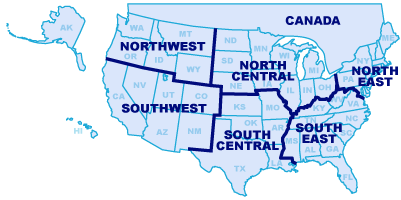
Click on the map below to bring schools in the selected region to the top of the list:







Articles on Art:
A Future with an Art Degree
By Calli Wolfenden, Staff Writer
Art is the intersection of creation, emotion, reflection, and communication. Throughout history, art has been commemorated, celebrated, and preserved. It offers a sanctuary for both creators and viewers, a place where one can look into the combination of shapes, materials, and colors and find meaning and understanding. Artists do so much more than make pretty pictures; they take the culture, complex feelings, messages, stories, and history and bind all of that into a work of art that speaks to its admirer.
Students who choose to major in art from a Christian college will be encouraged to nurture their creative spirit and challenge the boundaries of what can be done with materials, paint, and even graphics. An art degree from a Christian college will train students not only to create, but to analyze what has been created and to find meaning and beauty in all things. Christian colleges will prepare students who major in art for a career full of meaningful creation, impact, and appreciation for all that reflects the creative spirit of God.
Some example careers for students who major in Art:
- Fine Artist: A fine artist creates art for aesthetic or intellectual purposes, which may be displayed in galleries, museums, or public spaces. Their work could also be sold to collectors, institutions, clients, or the public. They work with various materials, through various styles, such as painting, drawing, sculpting, printmaking, and more. They often aim to convey emotions or ideas, or possibly challenge perceptions and provoke thoughts through their work.
- Graphic Designer: Graphic designers are artists who work with technology to create virtual pieces related to branding, websites, advertisements, or many other electronic visuals that inform, educate, or bring users to the desired platform. They work closely with marketing departments or clients to execute their vision and create designs that are both aesthetically pleasing and on-brand. Graphic designers have a strong grasp of both artistic design and technology.
- Art Educator: An art educator is a teacher whose area of focus is the Art. They can teach at any level, from elementary to higher education, at public and private schools, or in community settings. Art educators instill an appreciation for art and teach techniques, different ways to use materials, art history, and even art theory. They can be in many roles aside from teaching, branching to curriculum development, student assessments, and organizing exhibitions for student artwork.
- Illustrator: An illustrator is a professional artist who creates images or “illustrations” for books, magazines, text, advertisements, and digital media. They work to complement and bring to life ideas from clients or authors in their writing/content. They can be found in many industries, such as publishing, fashion, animation, and advertising. Illustrators are talented and practiced in using many mediums, like painting, sketching, and using digital tools.
- Art Director: An art director oversees the style and images in magazines, newspapers, movies, product packaging, and television production. They coordinate with designers, photographers, artists, and clients to make sure that the visual elements are cohesive and convey the desired message or tone. Art directors are vital in the design process, making decisions about overall designs, artwork, and layout.
- Museum/Gallery Curator: Museum or gallery curators manage collections of artworks or historical artifacts, ensuring that they are properly acquired, cared for, preserved, and presented. Curators work closely with artists, lenders, and other museums, making sure that the art is taken care of and properly preserved and displayed, based on the materials used.
- Art Therapist: Art therapists are licensed mental health professionals who help clients process emotional, mental, or behavioral illness, or other illnesses or trauma, through a combination of traditional psychotherapeutic practices and artistic/creative activities. Art therapy allows patients to express themselves, develop healthy coping mechanisms, improve self-esteem, and practice creativity. Art therapists can work in schools, rehabilitation centers, hospitals, or private practices.
- Fashion Designer: Fashion designers design and create clothing, accessories, and footwear that is aesthetically pleasing, trendy, and functional using a combination of artistic, creative, and technical skills. They work closely with manufacturers, models, and stylists to bring their vision to life and present it to the public. Fashion designers must stay up to date on modern fashion trends. They need to be capable of sketching designs, working with various materials, fabrics, and patterns, and have great communication skills to instruct others on how to make their designs.
An art degree opens up a plethora of opportunities. Because of how varied the career options are, tracking the success or placement rates for a degree in art is nearly impossible. An art degree can lead to careers in media and entertainment, marketing, architecture, design, fine arts, and more. With that in mind, determining how to succeed with a career in art is largely dependent on which field you plan to go into with it. However, there are some general things to do that can aid in success for any career for someone with an art degree.
A key to succeeding with a degree in art is creativity, of course, but that creativity needs to be showcased. Building a portfolio that shows off your work and the skills that you have in whatever field of art that you choose to go into is vital to not only succeeding, but even just starting a career in art. The portfolio should present any work you’ve done that you’re proud of, any projects you contributed to, and any experience you’ve gained through internships or workshops. Networking in the field you plan to work in is also incredibly valuable. Building contacts through your college, art fairs, internships, or networking events is vital to getting a leg up on competition post-graduation.
Some career paths for an Art degree may require more education or certification. However, even if your desired career path is not technically one of those that require further education, a willingness to continue learning is integral to a career in art. Learn from others, learn new techniques, learn what is and isn’t working. Art, though full of centuries-old, tried-and-true methods and techniques, is prone to changing with the culture and advancement of new technology. Continued learning on the part of an artist of any kind is part of the path to success and continued relevance.
While we can’t pin down specific placement rates for graduates with an art degree, we do know that there is plenty of opportunity available to those who major in art, especially in areas that are booming with culture, design, and history. Because of the intense variety of possible careers, the expected salary range for a graduate with an art degree can be anywhere from $50,000 to $70,000, with a large margin for differences when it comes to contract artists. Contract artists rely on commission for projects and selling their own art in their early career, so there is no guaranteed amount in that case (no guaranteed limit either).
The skills and characteristics that artists develop make them valuable assets in any number of roles. Artists are creative, collaborative, attentive to and focused on details, disciplined, self-motivated, and adaptable. These qualities aid them in doing great work not just for commission, entertainment, or businesses, but also in ministry.
Work Cited:
- “How Much Does an Artist Make?” Glassdoor, 18 Aug. 2024, www.glassdoor.com/Salaries/artist-salary-SRCH_KO0,6.htm.
An Art Degree and Ministry
By Calli Wolfenden, Staff Writer
An art degree provides people with an abundance of skills and creativity that can be used in so many ways to worship and bring glory to God, both in the Church and in ministry.
2 Chronicles 2:13-14
“I am sending you Huram-Abi, a man of great skill, whose mother was from Dan and whose father was from Tyre. He is trained to work in gold and silver, bronze and iron, stone and wood, and with purple and blue and crimson yarn and fine linen. He is experienced in all kinds of engraving and can execute any design given to him. He will work with your skilled workers and with those of my lord, David your father.”
When Solomon set out to build the Temple of the Lord, he was sent an Artist, gifted in all kinds of crafts, to assist in crafting the temple so that it might be as beautiful and great as possible. If artists were entrusted then to make a beautiful place of worship, why should now be any different?
The skills that someone with a major in art has can be incredibly valuable in ministry and the Church. Someone with digital art skills like graphic design or animation can create visuals for sermons and worship. They can also enhance the user experience of online platforms to make getting the message out through websites and streams much easier. Artists can also help create evangelical material, posters, advertisements, or other marketing pieces that help draw people in. Physical art in a sanctuary can also help provide emotional connection or visualization to those worshipping.
Art can also be a healing experience, helping people process difficult emotions, trauma, or their walk with Christ. Artists can minister to others in the church or community through art therapy or art workshops/classes to engage people with their creative inheritance from the Creator himself. Providing visuals to use for storytelling and connection with other cultures or ages is also a great way that an art degree can be used in ministry and the Church. The many skills and characteristics of an artist are highly sought after and have many potential benefits in ministry.
If you love art, are resilient, determined, and ready to challenge the boundaries of what can be created, then pursuing an art degree at a Christian college could be the path for you!